
Previously published on May 22
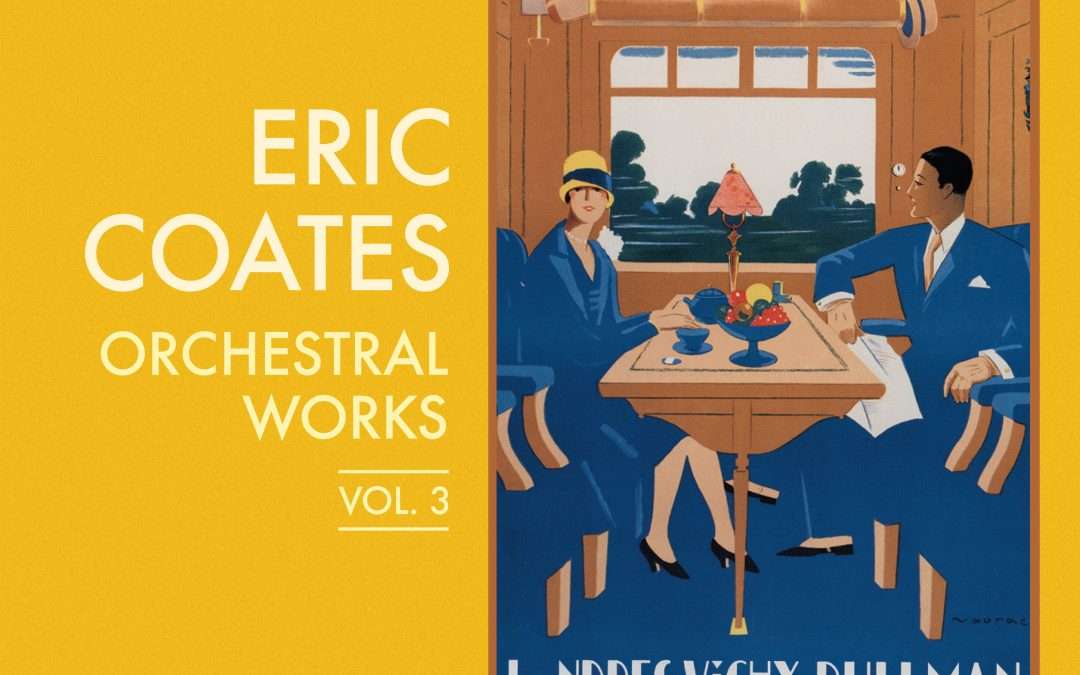
Chocks Away! Included here is The Dam Busters, not a ‘quick’ march, but that’s what John Wilson delivers, although the brakes are at least applied for the reprise of the ‘big’ tune, which now seems a bit hollow. There are also The Three Men, a high-spot in Coates’s output, and despite a generally fine outing here, especially in the languorous middle movement, Wilson must yield somewhat to John Lanchbery’s Sydney Symphony version (Wilson is in a rush at times); Cinderella (‘A Phantasy’; sic) – a story musically well told and vividly relayed from MediaCityUK, Salford (March 2022) –; and The Three Elizabeths (‘Tudor’; ‘Glamis’; ‘Princess’) – given with the right degree of all’s-well contentment and sprightly strides/grandeur. Shorter pieces include the bright and breezy Television March (written for the relaunch – June 6, 1946 – of BBC TV broadcasts post-WWII), Last Love, and Sweet Seventeen, the last two respectively sentimental and a charming waltz bathed in remembrance. Agile and sensitive playing throughout from the BBC Phil coupled with top-drawer sound from Stephen Rinker. Chandos CHAN 20164 is released on June 2. Outstanding with the odd reservation that may not be agreed with!
The problem for Coates’s Dam Busters March is that the main trio section is melodically virtually identical to the song ‘I’ll Never Stop Loving You’ which appeared a few weeks later in the same year (1955) – in very fine versions by David Whitfield (music was by Nicholas Brodsky), and Doris Day. It would seem that this tune occurred to both composers at the same time – the similarities are incredible – but that similarity bothered Coates a great deal and caused him considerable anguish. At the time, some said he copied it from the pop song; Brodsky was completely unaware of the film (which was released in the USA after he’d written the song) – the musical coincidences between the song and Coates’s March are extraordinary, but no legal shenanigans ensued – both composers acknowledging their individual creativity. Today, Brodsky’s song is virtually forgotten, and it is Coates’s excellent March which has had by far the greater longevity, but it is a curious musical happenstance that caused no little ruckus at the time.
Thanks Bob, intriguing, here’s the Doris Day version of ‘I’ll never stop loving you’ with Percy Faith & his orchestra.
https://www.youtube.com/watch?v=ZJQKK3AuAwA
From John Wilson’s above recording, a couple of no-doubt coincidences: the opening of Television March reminds very strongly of Julius Fucik’s much-earlier Entry of the Gladiators; and, in the first movement of the Three Men suite, for just a few seconds (3:15-3:19, track 2) there’s a ‘harmonic turn’ (my attempt to so-describe) that to my mind is copyright Percy Grainger.
Goodness me, your knowledge is so extensive, Bob! An interesting sidelight….
Well, it just struck me quite strongly at the time (1955) – but I did actually meet Doris Day twenty years later at the Century Plaza Hotel in Los Angeles, after a Barbra Streisand concert (never met Streisand!) – and she was one of the most charming people I have ever met; lovely conversation – truly unforgettable lady.
The Dam Busters is actually a quick march. The score indicates crotchet = 140 at the beginning. Upon the introduction of the main theme, it drops to a Cantabile crotchet = 120 before picking up again to 140.