
Sunday, August 2, 2026
Klein Music Tent, Aspen Music Festival and School, Aspen, Pitkin County, Colorado
Sometimes a number is enough, whether Opus, Deutsch or Köchel, et al. Or something like ‘Bruckner Seven’, omitting Symphony, or a title abbreviation, such as ‘Pag Rhap’, and with them can come charges of elitism – ha! – no, rather it depends on context, who is being communicated with or if it scans into a review: no point in writing Mozart’s Piano Concerto No.24 in C-minor if K491 will suffice. Throw Schoenberg’s Opus 31 into the mix and, for me, Variations for Orchestra need not be specified, one of the greatest works of the twentieth-century, which I have known since my teenage years (no-one warned me to beware of it). One wonders how this complex masterpiece fared at its 1928 premiere conducted by the (allegedly) technically deficient Furtwängler. Ditto another striking piece, Stravinsky’s Symphony in Three Movements, which the composer launched in early 1946 with the New York Philharmonic. Whether this Aspen concert juxtaposing these works was a good idea is a moot point, the danger being one cancelling out the other given they were side by side.
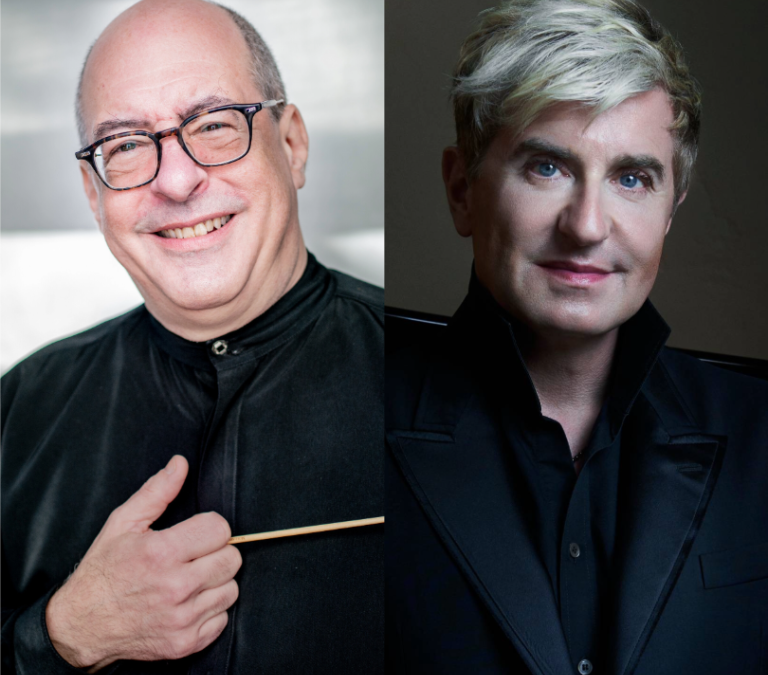
No worries, Robert Spano (Aspen music director) led a lucid Variations performance, remarkably well-played by the Festival Orchestra students, so expressive and dynamic, which rather suggests that (as here) if you speak about this music as something that might be feared, then it probably will be. Whilst a remark like “nine variations in search of an audience” (radio presenter) is certainly amusing, a reading such as this, of meticulous preparation and clarity, spoke so eloquently on behalf of Opus 31.
The Stravinsky – with movie connections, whether wartime footage or unused music that the composer had drafted for The Song of Bernadette (Alfred Newman got the job instead) – was not so good, the first movement under-tempo (marked crotchet=160), dogged, the important piano far away, although the ballet steps and radiant beauty of the second movement were finely caught, harp clear, and the Finale had a decent impetus and a resounding conclusion.
Here, it seemed that the Stravinsky is the trickier work, certainly to play, even to make sense of.
Due to a clash, I was unable to hear Gershwin’s Concerto in F (1925) – and that is its official published title.
My first recordings of this repertoire…
LA Phil/Zubin Mehta
LSO/Colin Davis
André Previn (pf & director)/LSO
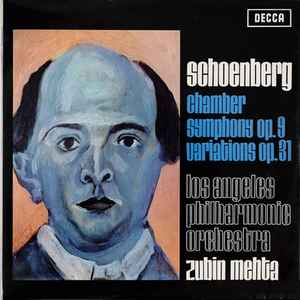
SXL 6390

As reissued and recoupled.
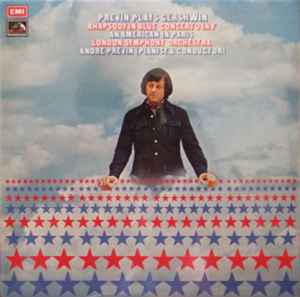
ASD 2754